Short answer
Mochi is a Japanese rice cake made from glutinous rice that is pounded or ground into a smooth, stretchy dough. It is eaten plain, filled with sweet red bean, wrapped around ice cream or baked into cakes and donuts.
Mochi is a Japanese rice cake made from glutinous rice, a short-grain rice that turns sticky and stretchy when cooked, and it is pounded or ground into a smooth, soft dough. It can be eaten plain, filled with sweet red bean paste, wrapped around ice cream, baked into cakes or fried into donuts. This guide explains what mochi is made from, how the traditional and modern versions differ, the best-known forms and the Chinese and Taiwanese relatives you may meet in a bakery. It also states which Six Ping menu item is related to mochi.
What is mochi made from?
Mochi is made from glutinous rice, called mochigome in Japanese, or from flour milled from that rice. Despite the name, glutinous rice has no gluten. “Glutinous” here means glue-like and sticky.
The stickiness comes from the starch. Glutinous rice is high in amylopectin and low in amylose, which gives it the elastic, stretchy texture that ordinary rice does not have. When cooked or mixed with water and heated, it turns into a smooth dough that holds its shape and stays chewy.
The other ingredients are minimal. Water and sometimes sugar are added, and the dough is dusted with starch so it does not stick. The simplicity is the point, because the texture carries the product.
How is mochi traditionally made?
Traditional mochi is made by steaming glutinous rice and pounding it in a large mortar with wooden mallets until it forms a smooth, elastic mass. The practice is called mochitsuki, and in Japan it is associated with the New Year.
The work is physical. One person turns and wets the rice while another strikes it, and the rhythm has to be kept so the turner’s hands are not struck. The finished dough is then shaped by hand into rounds or cut into pieces.
Most mochi sold today is not made that way. Many shops use machines for pounding or use a flour method, because it is faster and more consistent. Machine-made and flour-made mochi are not lesser products. They are different routes to a similar chew.
What are the main ways to make mochi?
There are three main routes: pounded from steamed rice, made from rice flour cooked with water and sugar, and baked in the oven. The route sets the texture, the effort and the shelf life.
| Method | Starting point | Effort | Result |
|---|---|---|---|
| Pounded | Steamed whole glutinous rice | High, needs a mortar or a machine | Smooth, very elastic |
| Flour, steamed or microwaved | Glutinous rice flour, water, sugar | Low, home-friendly | Soft, slightly less stretchy |
| Baked | Glutinous rice flour, butter or milk, eggs | Low to medium | Chewy edges, a cake-like crumb |
Glutinous rice flour goes by several names in shops, including mochiko, shiratamako and plain “glutinous rice flour.” They differ in grind and behavior, so a recipe that names one is best followed with that one. Home cooks usually pick the flour method, and the same dough can then be filled.
What is daifuku, and how is it different from plain mochi?
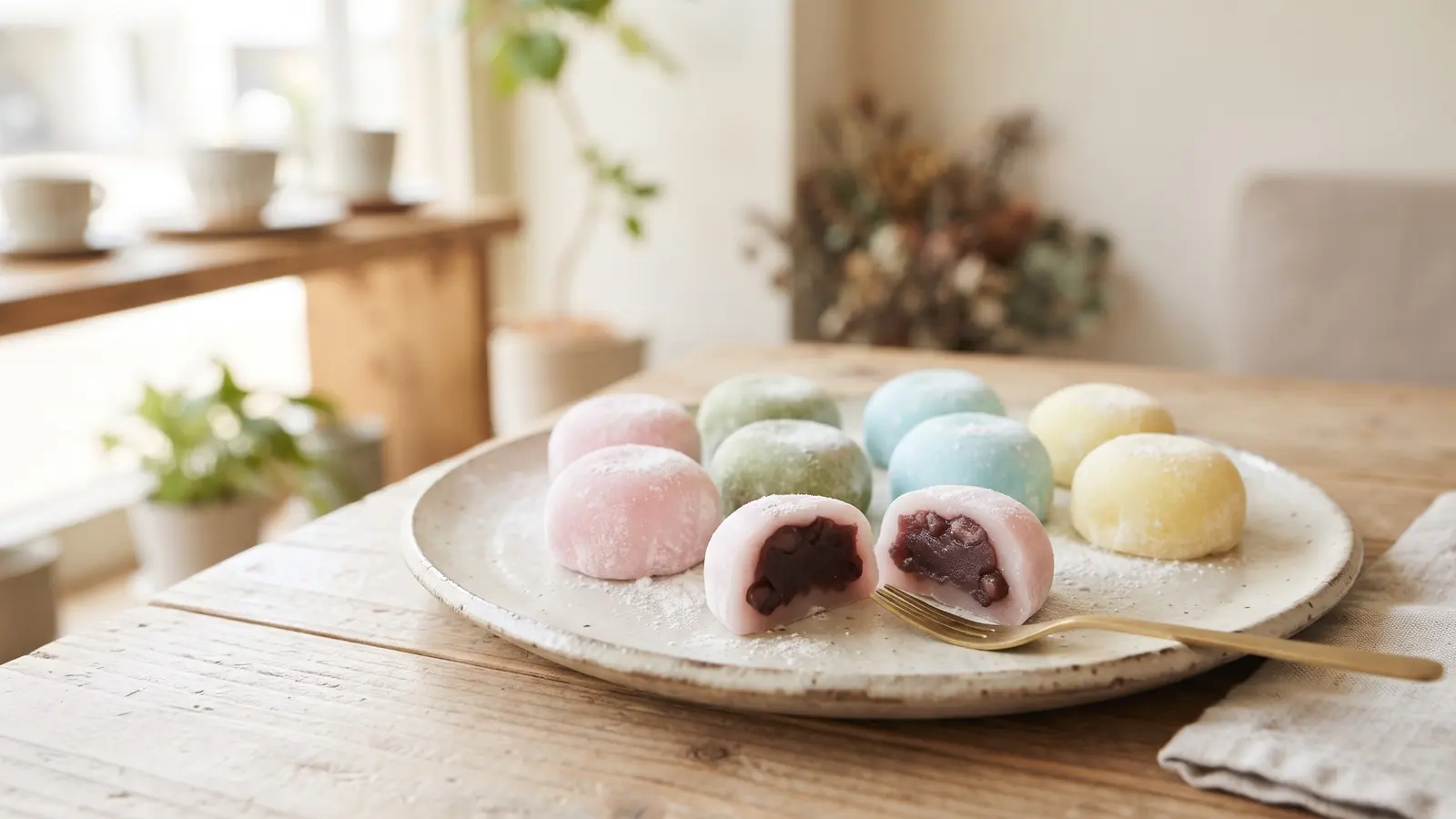
Daifuku is a mochi dessert with a sweet filling inside a soft mochi skin, most often sweetened red bean paste. Plain mochi is the dough itself, while daifuku is a finished sweet.
The classic version uses red bean paste, either smooth or chunky. Variations include white bean paste, peanut, sesame and whole fruit. A famous one adds a whole strawberry with the paste, sold as strawberry daifuku in season. Daifuku is dusted with starch so it can be handled.
The skin is meant to be soft and thin, and the dessert is best eaten the day it is made, because the dough firms up as it sits. Many sellers sell it fresh and in small amounts for that reason.
What are mochi ice cream, mochi donuts and other modern forms?
Modern forms include mochi ice cream, where a mochi skin wraps ice cream, mochi donuts, baked butter mochi and mochi waffles. They borrow the chew of the rice cake and place it in a Western-style dessert.
Mochi ice cream is a ball of ice cream inside a thin sheet of mochi, kept frozen and eaten a few minutes after it comes out of the freezer so the skin softens. Mochi donuts are made with glutinous rice flour, often in a ring of small balls, and have a chewier, springier crumb than a standard donut. Butter mochi is a baked cake popular in Hawaii that is made with the flour, milk and butter, and it has chewy edges.
The common thread is the flour. If a dessert is called mochi and is not a rice cake, look for glutinous rice flour in the recipe or the description.
How do mochi and its Chinese and Taiwanese cousins compare?
Mochi has close relatives across East Asia, all based on glutinous rice, and they differ in shape, filling and how they are eaten. The names and recipes vary, and the table shows the main ones.
| Name | Where | What it is | Typical form |
|---|---|---|---|
| Mochi | Japan | Pounded or flour-based glutinous rice cake | Plain, filled, grilled, in soup |
| Tangyuan | China | Glutinous rice balls with a sweet or savory filling | Served in a sweet soup |
| Nian gao | China | Sticky rice cake, often eaten at the Lunar New Year | Sliced, steamed or pan-fried |
| Muah chi or mochi | Taiwan | Soft glutinous rice dessert, often rolled in peanut or sesame | Bite-size pieces |
| Tteok | Korea | Rice cakes of many kinds | Chewy sticks, slices, filled cakes |
Taiwanese bakeries and dessert shops use mochi in several ways, from small rolled pieces to soft-shelled cakes with a chewy filling. The Taiwanese word for the chew, “QQ,” is used to praise it. The same texture appears in tapioca pearls, though those are made from cassava starch and not from rice.
Is mochi easy to eat safely?
Mochi is safe for most people when eaten in small bites and chewed well, but it is very sticky, and it can be hard to swallow. In Japan, where mochi is common, public safety advice every New Year reminds people to cut it into small pieces and to take care with children and older adults.
That is a practical caution, not a health claim about the food. If you are serving it to small children or to anyone who has trouble chewing or swallowing, choose a soft, small form or another dessert.
Fresh mochi also spoils faster than baked goods, so it is best eaten soon after it is made. This guide gives no dietary or medical advice, and anyone with an allergy should ask the maker about every ingredient in the filling and coating.
How can you make and store mochi at home?
The simplest home method is to mix glutinous rice flour with water and sugar, cook it until it turns translucent and sticky, then shape it with a starch-dusted surface. Follow a recipe that names the flour you have, because the water ratio depends on the product.
Cooked mochi dries and hardens in a day or two at room temperature. To keep it, wrap it tightly and freeze it, then thaw at room temperature or warm it briefly. Hardened mochi can be grilled or pan-fried, which makes it chewy again, or added to soup.
Keep the work surface dusted with potato starch or cornstarch. Without a dusting, the dough sticks to everything.
What fillings and coatings go with mochi?
Mochi is mild, so it is paired with sweet bean paste, roasted soybean flour, sesame, soy sauce and seaweed, or with fruit and cream. The pairing sets whether it is a sweet or a savory snack.
- Red bean paste (anko): the classic sweet filling, smooth or chunky.
- Kinako: roasted soybean flour, nutty and lightly sweet, used as a dusting.
- Sesame or peanut: ground and sweetened, common in Chinese and Taiwanese versions.
- Soy sauce and nori: grilled mochi wrapped in seaweed, a savory snack.
- Soup: mochi added to a New Year soup called ozoni in Japan, which varies by region.
- Fruit and cream: whole strawberry, custard or whipped cream inside a soft skin.
The coatings do practical work as well as adding flavor. Starch keeps the dough from sticking to hands and trays, and a roasted flour adds taste without much moisture.
What does QQ mean when people describe mochi?
QQ is a Taiwanese word for a pleasantly bouncy, chewy texture, and it is the praise word for mochi, tapioca pearls and fresh noodles. It describes the way the food springs back when you bite.
The term is used in Taiwanese and Chinese food writing across drinks and desserts, and menus sometimes list items as “QQ” to say they are chewy. The word is not a technical measure, and no two cooks agree on exactly how much chew counts. It is a useful clue when you read a menu, because it tells you the texture before the taste.
How does mochi connect to Six Ping in Houston?
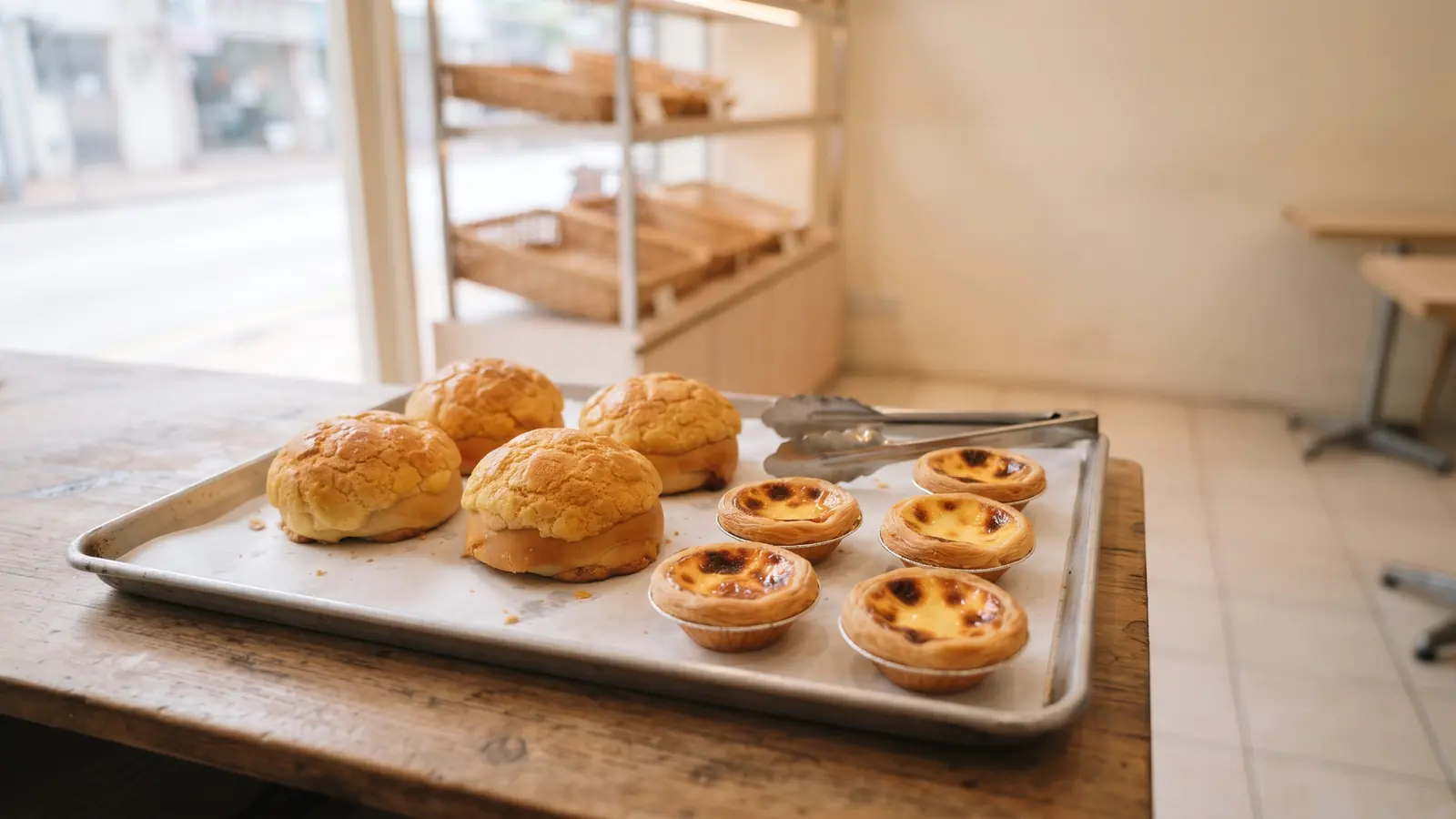
The recorded Six Ping menu lists one mochi item: Brown sugar mochi cake, described in a 2011 Houston Press review as a soft-shelled cake with a chewy brown sugar filling, at the 9384 Bellaire Blvd shop. It is on the menu data as recorded in November 2026, but that review is old, so this guide cannot confirm it is still sold.
No price was confirmed, so none is given here. The 9384 Bellaire Blvd address is now listed as the separate Six Ping Teamenjoin tea shop, and the items from that review were not matched to its ordering page. For what is sold now, check the official Six Ping website or call the shop. The menu page lists the other recorded items and the locations page lists the shops.
Common questions
Is mochi gluten-free?
Glutinous rice contains no gluten despite the name, but a finished product can include other ingredients, so check the label or ask the maker.
Why is mochi so chewy?
Glutinous rice is high in a starch called amylopectin, which becomes sticky and elastic when cooked or mixed with water.
What is the difference between mochi and daifuku?
Mochi is the rice dough, and daifuku is a mochi dessert with a sweet filling inside, most often red bean paste.
Is mochi hard to eat?
It is sticky and should be chewed well and in small bites, and small children and people with trouble swallowing should be careful.
Is mochi Japanese or Chinese?
Mochi is the Japanese name and tradition, but rice cakes made from glutinous rice exist across China, Taiwan, Korea and Southeast Asia in many forms.
Before you go, check the Six Ping Bakery Houston guide for the current hours and the menu.
This article is general information from an independent guide, not from Six Ping Bakery itself. For the store’s current details see hours and location.