Short answer
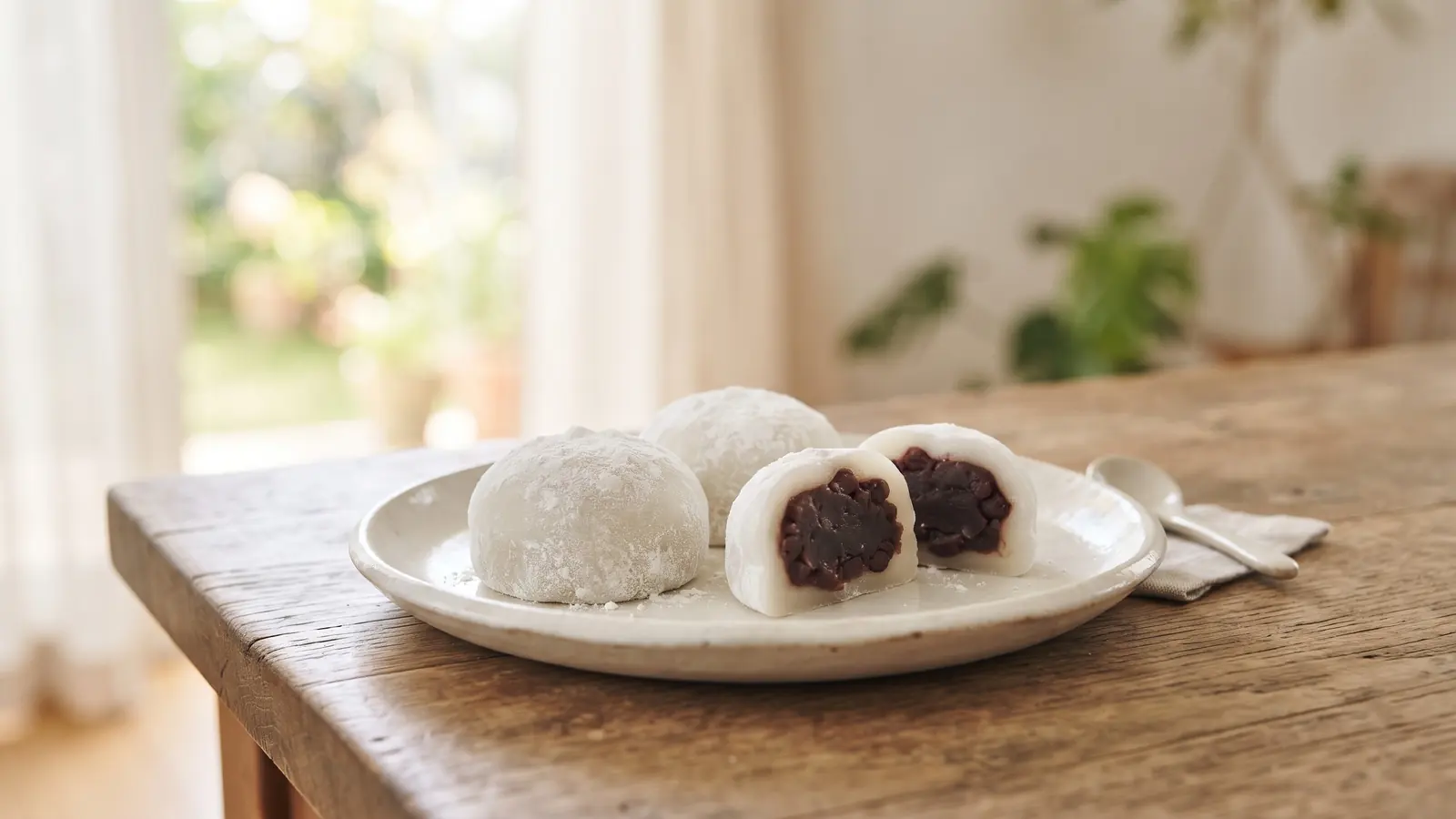
Red bean mochi is a soft, chewy rice cake made from glutinous rice that is wrapped around sweet adzuki bean paste. It is eaten across Japan, China and Taiwan, and the filling can be smooth or chunky.
Red bean mochi is a soft, chewy rice cake made from glutinous rice dough that is wrapped around sweet adzuki bean paste. It is a popular sweet in Japan, China and Taiwan, and it is often sold in Asian bakeries, tea shops and grocery stores. This guide explains what red bean mochi is, how it tastes, how it is made and how it differs from red bean buns and other sweets, and it says plainly what could be confirmed about Six Ping.
What is red bean mochi?
Red bean mochi is a small dumpling of stretchy rice dough with a filling of sweet red bean paste in the center. The dough is made from glutinous rice, which is sticky once cooked, and the paste is made from adzuki beans cooked with sugar.
In Japan, a mochi with a sweet filling is called daifuku, and the red bean version is the classic form. In Chinese and Taiwanese bakeries, similar rice-dough sweets appear under local names, and the same filling is also used in soft buns and pastries.
The pieces are usually the size of a golf ball or smaller. The surface is dusted with starch so the sticky dough does not cling to fingers or to the box.
What does red bean mochi taste like?
Red bean mochi tastes mildly sweet and earthy, with a soft, elastic dough around a smooth or slightly grainy bean center. The rice dough is nearly neutral, so the filling provides the flavor.
The texture is the point. The dough is pillowy and stretches when bitten, and it is chewy without being tough. The paste is soft and dense. Smooth paste, sometimes called koshian in Japanese, has no skins, while chunky paste, or tsubuan, keeps pieces of the bean for a rougher bite.
The flavor sits between sweet and nutty. Adzuki beans taste earthy, a little like chestnut, and the sugar rounds them out. Many people find red bean mochi less sugary than Western candy or cake.
How is red bean mochi made?
Red bean mochi is made by cooking glutinous rice into a smooth, sticky dough, dusting it with starch, wrapping it around balls of red bean paste and shaping each piece by hand. Home cooks usually start from glutinous rice flour instead of whole rice.
- Prepare the filling. Simmer adzuki beans with sugar until soft, mash them, and cook down to a thick paste. Cool the paste and roll it into small balls.
- Make the dough. Mix glutinous rice flour with water and sugar, then steam or microwave until the mixture turns translucent and sticky.
- Stretch and cool. Knead the hot dough briefly, then turn it onto a surface dusted with cornstarch or potato starch.
- Wrap. Cut the dough into pieces, flatten each one, set a ball of bean paste in the center and pinch the edges closed.
- Rest and serve. Place the seam side down and eat the mochi the same day, while the dough is soft.
Traditional Japanese mochi is pounded from steamed rice in a mortar, which makes a denser, more elastic dough. Flour-based mochi is quicker and gives a softer, slightly lighter result. Both are valid methods, and shops use the one that fits their volume.
Red bean mochi vs red bean bun: what is the difference?
The main difference is the wrapper: red bean mochi uses a sticky rice dough and has no bread in it, while a red bean bun uses a baked or steamed wheat dough. The filling can be the same adzuki paste in both.
| Feature | Red bean mochi | Red bean bun |
|---|---|---|
| Wrapper | Glutinous rice dough | Wheat dough, baked or steamed |
| Texture | Chewy, stretchy | Soft, fluffy bread |
| Served | Cool or at room temperature | Often warm |
| Size | Small, a few bites | Palm-sized |
| Where found | Japanese and Chinese sweets, tea shops | Chinese and Taiwanese bakeries |
A Chinese or Taiwanese bakery may carry both, and the two suit different moods. The bun is a snack with tea, while the mochi is closer to a small dessert.
What other fillings are used in mochi?
Besides red bean, mochi is filled with white bean paste, black sesame paste, peanut, taro, custard, matcha paste, fresh strawberry and ice cream. Each shop makes its own choices, and some pieces combine two fillings.
| Filling | Flavor | Where it shows up |
|---|---|---|
| Red bean paste | Sweet, earthy | Daifuku, bakery mochi cakes |
| White bean paste | Mild, buttery | Japanese sweets |
| Black sesame | Nutty, toasted | Chinese and Taiwanese desserts |
| Peanut | Roasted, sandy | Taiwanese and Southern Chinese mochi |
| Taro | Creamy, vanilla-like | Taiwanese desserts and tea shops |
| Ice cream | Cold, creamy | Frozen mochi |
If you want red bean specifically, ask for it by name. In a shop where the fillings are not labeled, a quick question is the safest way to find out.
How do you store and eat red bean mochi?
Eat red bean mochi on the day it is made, at room temperature, because the dough hardens in the refrigerator and loses its softness within a day. This is the standard advice for fresh, non-preserved mochi.
- Room temperature: keep covered for the day, away from heat and direct sun.
- Refrigerator: only when needed, and let the mochi come back to room temperature before eating.
- Freezer: many shops freeze individually wrapped mochi, then thaw it at room temperature for an hour or so.
- Reheating: a few seconds in a microwave can soften a hard piece, though results vary.
Mochi is sticky and chewy, and it has caused choking, especially in older adults and small children. Cut it into small pieces for children and chew carefully. This guide gives general advice, not medical advice.
Is red bean mochi on the Six Ping menu?
No, a plain red bean mochi is not on the recorded Six Ping menu, but two related items are. The menu data for this guide lists a Brown sugar mochi cake at the bakery, described in a 2011 Houston Press review as a soft-shelled cake with a chewy brown sugar filling. The Six Ping Teamenjoin ordering page, at the tea shop on Bellaire Boulevard, lists a Red Bean Pastry at $3.75 as of November 2026.
The Red Bean Pastry is a pastry and not a mochi, and the guide does not know whether it contains mochi. The bakery items have no confirmed price. For what is on the shelf today, call the shop or use the official website linked from the hours and location page. The full recorded list is on the menu page.
Common questions
Is red bean mochi the same as daifuku?
Daifuku is the Japanese name for a mochi with a sweet filling, and red bean is the classic one. Red bean mochi is therefore very often a daifuku, though the term also covers other fillings.
Is red bean mochi gluten free?
Mochi dough is made from glutinous rice, which contains no wheat gluten despite the name. Fillings, dusting powders and shared kitchens can differ, so ask the shop about any allergy or dietary need.
Why is mochi so sticky?
Glutinous rice is high in a starch called amylopectin, which turns elastic and sticky when cooked and pounded or steamed. That stretch is the signature texture of the dessert.
Can mochi be frozen?
Many mochi freeze well. Wrap each piece, freeze it, and thaw it at room temperature before eating. Texture varies by recipe, and soft mochi with fresh fruit should not be frozen.
Is red bean mochi very sweet?
It is mildly sweet. The dough itself is plain, and the sweetness comes from the bean paste, which tastes earthy as well as sugary. Dusting starch keeps the outside from tasting sugary.
Looking for the basics? Six Ping Bakery address and opening hours are on the home page.
This article is general information from an independent guide, not from Six Ping Bakery itself. For the store’s current details see hours and location.