Short answer
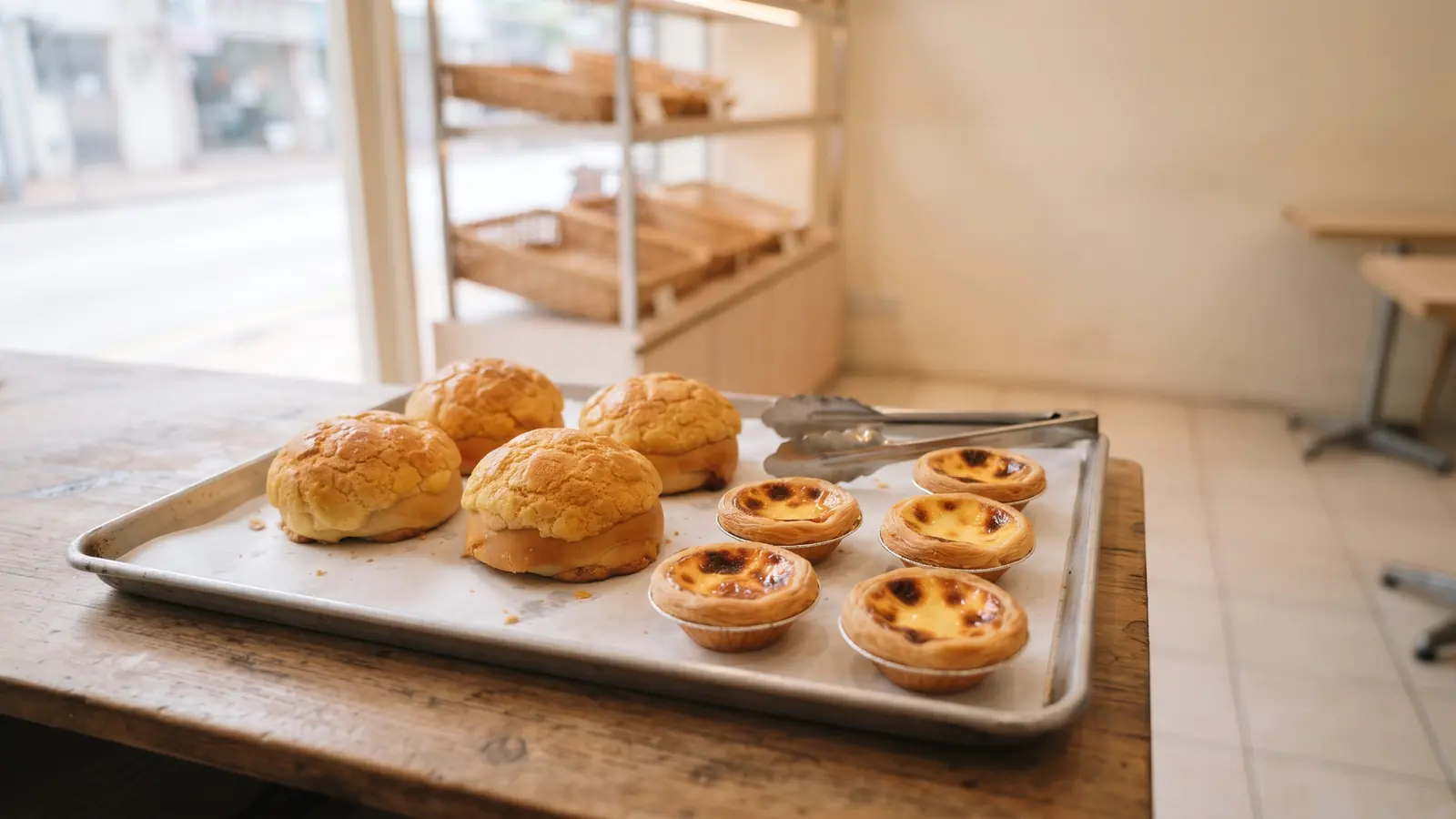
A Portugal egg tart is a small tart of flaky pastry filled with a rich egg custard and baked at high heat until the top blisters and browns. It comes from Portugal as pastel de nata, and Chinese and Macanese bakeries sell a close relative.
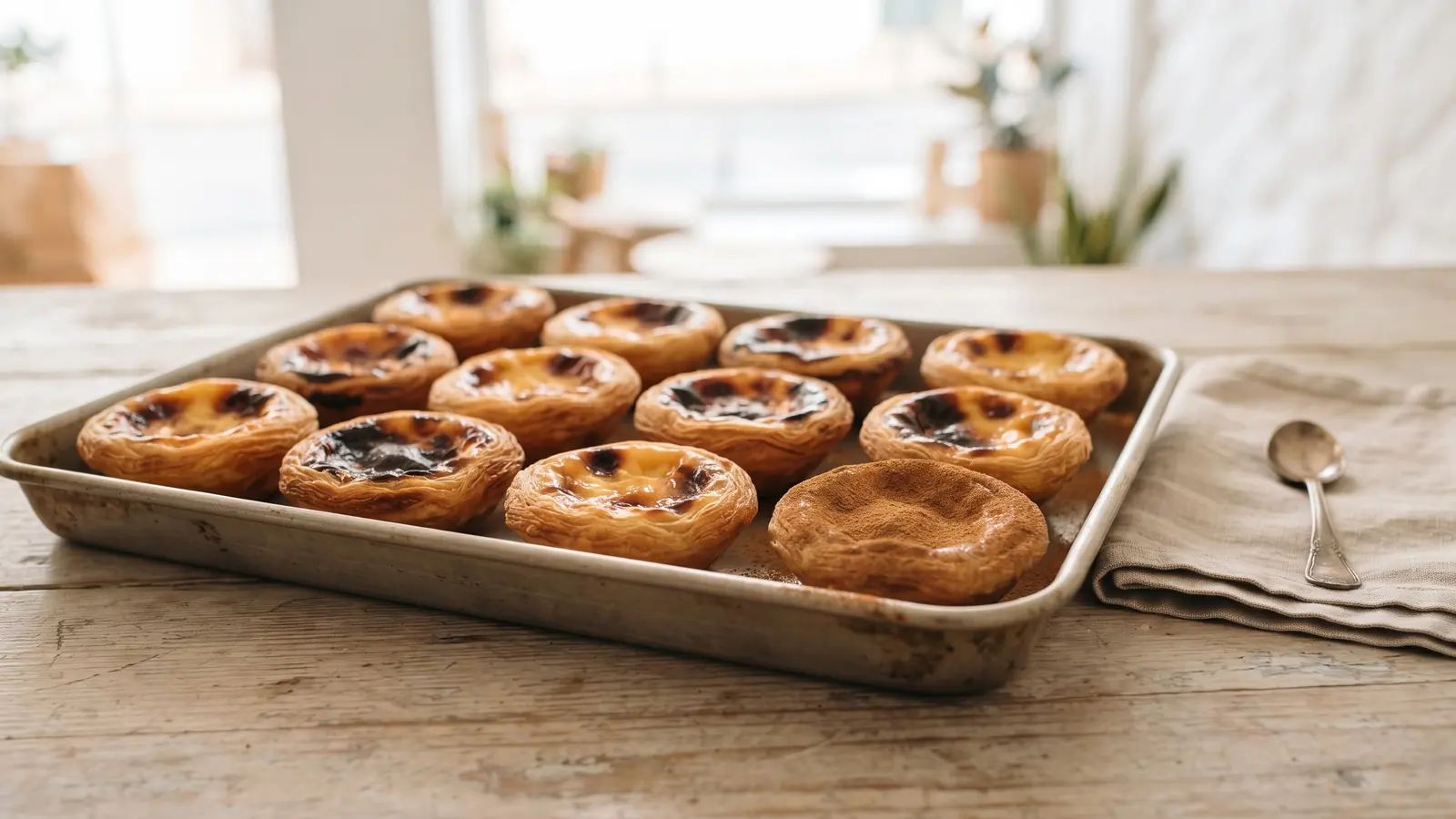
A Portugal egg tart is a small tart of flaky pastry filled with a rich egg custard and baked at high heat until the top blisters and turns dark in spots. It descends from the Portuguese pastel de nata, and Chinese and Macanese bakeries sell a close relative of it. This guide explains what the tart is, how it is made, how it differs from the Hong Kong egg tart and where it fits on a Houston bakery tray.
What is a Portugal egg tart?
A Portugal egg tart is a palm-sized tart with a laminated, flaky shell and a smooth egg custard that is baked until its surface blisters. In Cantonese bakeries it is often written as Portuguese tart, and in Macau it is one of the best-known street and cafe snacks.
The tart is a variant of the Portuguese pastel de nata (plural pasteis de nata). Both share the same idea: a thin pastry cup, a custard that stays soft in the middle and a top browned by strong heat. The Chinese-style version tends to be a little sweeter and eggier than the Lisbon original.
The tart is eaten as a snack, with tea or coffee, or as a small dessert. It is sold in bakeries, tea cafes and dim sum restaurants across East and Southeast Asia, and in Chinese bakeries in the United States.
Where does the Portugal egg tart come from?
The tart comes from Portugal, where pastel de nata is traditionally linked to the Belem district of Lisbon and to monks who made pastries from egg yolks in the early nineteenth century. The story is told in several ways, so treat the exact dates and names as one account among others.
The Chinese version has a separate and better documented line. A British baker named Andrew Stow opened a bakery in Macau in 1989 and adapted the Portuguese tart to local ingredients and tastes. The result became a symbol of Macau and spread to Hong Kong and other Chinese food scenes. In Chinese bakeries the tart is often sold under its Cantonese name, which translates to Portuguese tart.
Because the history has several sources, a bakery may describe its own tart differently. The recipe is a family of styles, not a single fixed standard.
What is inside a Portugal egg tart?
A Portugal egg tart contains flaky pastry, egg yolks, sugar, milk or cream, a little flour or cornstarch to thicken the custard, and often vanilla or lemon peel. Some bakers add a touch of cinnamon to the custard, though many leave it for the table.
The shell is made from puff pastry or a similar laminated dough. The dough is rolled, folded with butter many times and shaped into a small cup. The thin layers of fat and dough puff up in the oven, which gives the shell its crisp, shattering bite.
The custard is cooked first on the stove, then poured into the shells and baked. The two-step method gives a smooth, thick custard that does not run when you bite into the tart.
| Part | Typical ingredients | What it contributes |
|---|---|---|
| Pastry shell | Flour, butter, water, salt | Crisp, flaky layers |
| Custard | Egg yolks, sugar, milk or cream | Rich, smooth, soft center |
| Thickener | Flour or cornstarch | Keeps the custard set |
| Flavor | Vanilla, lemon peel, sometimes cinnamon | Aroma and a lift in sweetness |
How is a Portugal egg tart made?
A Portugal egg tart is made by lining small molds with laminated pastry, filling them with a cooked custard and baking them at a very high oven temperature for a short time. The high heat is what gives the blistered, caramelized top.
- Make or buy the pastry. Roll out puff pastry, cut rounds and press them into small tart molds so the sides stand slightly above the rim.
- Cook the custard base. Warm milk or cream with sugar, whisk in a thickener and then the egg yolks, and stir over gentle heat until the mixture coats a spoon.
- Fill the shells. Pour the custard in, leaving a small gap below the rim because the custard puffs as it bakes.
- Bake hot. Home recipes often call for a very hot oven, around 475 degrees Fahrenheit, for about ten to fifteen minutes. Settings vary by oven and recipe, so follow the instructions you are using.
- Cool briefly. Let the tarts rest a few minutes in the molds so the custard sets, then lift them out.
The same method explains the look. The dark spots appear where sugar and milk proteins brown, and they show that the oven was hot enough. A tart that stays pale usually spent too long at too low a temperature.
Portugal egg tart vs Hong Kong egg tart: what is the difference?
The main difference is the finish: the Portugal egg tart has a blistered, caramelized top and a flaky pastry, while the Hong Kong egg tart has a smooth, glossy, pale yellow custard in either a puff or shortcrust shell.
| Feature | Portugal egg tart | Hong Kong egg tart |
|---|---|---|
| Top | Blistered, dark spots | Smooth, glossy, even |
| Shell | Flaky puff pastry | Shortcrust (cookie-like) or puff |
| Custard | Rich, a little thicker | Lighter, silkier, jiggly |
| Bake | Very hot oven | Moderate oven |
| Common origin story | Lisbon, then Macau | Guangzhou and Hong Kong tea houses |
Neither tart is better. They answer different tastes, with the Portugal tart offering more contrast of crisp and caramel and the Hong Kong tart offering a gentler, silkier bite. A bakery that sells both lets you compare them side by side.
How do you eat a Portugal egg tart?
Eat a Portugal egg tart with your hands, while it is still warm, and in a few bites. The thin shell breaks easily, so hold it over a plate.
- Eat it fresh on the day it was baked, when the shell is at its crispest.
- Add cinnamon and powdered sugar if the shop sets them out, the way many Portuguese cafes do.
- Pair it with black tea, milk tea or coffee, which balance the sweetness.
- If the tart is cold, warm it in a hot oven for a few minutes. A microwave softens the pastry.
How long does a Portugal egg tart keep?
A Portugal egg tart is best on the day it is baked, because the shell softens as the custard sits. Egg custard is a perishable food, so a bakery tart should be eaten soon or kept cold, and a shop can tell you how long its own tarts are good for.
Refrigerate any tarts you do not eat the same day in a covered container, and warm them briefly in a hot oven before serving. Do not leave custard tarts out for long at room temperature. This guide gives general advice, and the shop or recipe you use is the authority for storage times.
Is a Portugal egg tart on the Six Ping menu?
No, a Portugal egg tart is not on the recorded Six Ping menu. The menu data for this guide, recorded in November 2026 from a directory listing, a 2011 Houston Press review and the Six Ping Teamenjoin ordering page, does not list an egg tart of any kind. The recorded bakery items include milk bread, sweet breads, savory breads, custard bun, pandan cake, taro cake and birthday cakes.
That record is not a current shelf list, and bakery counters change through the day. For what is available now, call the shop or check the official website linked from the hours and location page. The full recorded list is on the menu page. Prices for the bakery items were not confirmed, so none is given here.
Common questions
Is a Portugal egg tart the same as a pastel de nata?
They are close cousins. Pastel de nata is the Portuguese original, while the Portugal egg tart sold in Chinese bakeries is the Macanese version of it, often a little sweeter and eggier.
Why does the top of the tart have dark spots?
The dark spots come from the sugar and milk proteins in the custard browning in a very hot oven. They are expected, and bakers often treat them as a sign of a well-baked tart.
Should a Portugal egg tart be eaten warm or cold?
Most people prefer it warm, when the pastry is crisp and the custard is soft. A cold tart is still good, but the pastry softens, so a short reheat in a hot oven helps.
Do you need a spoon to eat a Portugal egg tart?
No spoon is needed. The tart is small and held in the hand. The pastry shell is thin and flaky, so expect crumbs and eat it over a plate or napkin.
Is cinnamon traditional on the tart?
In Portugal, a shaker of cinnamon and powdered sugar is usually offered at the counter, and each person adds their own. Chinese bakeries often sell the tart plain.
Planning a visit? Start with Six Ping Bakery Houston: address, opening hours, menu and directions in one place.
This article is general information from an independent guide, not from Six Ping Bakery itself. For the store’s current details see hours and location.