Short answer
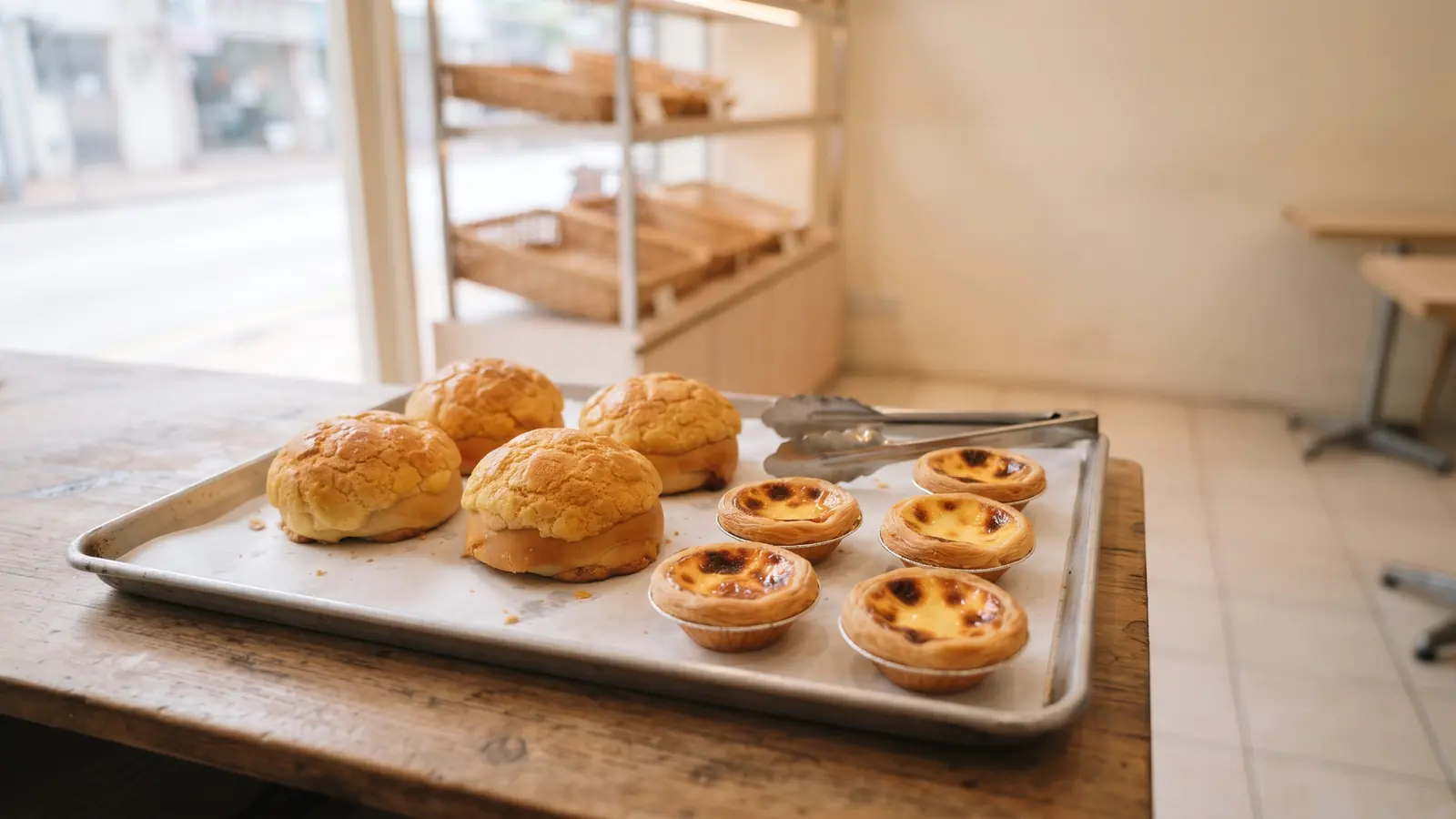
A pineapple bun, called bo lo bao in Cantonese, is a soft sweet bun topped with a crisp, sugary cookie crust that cracks into a pattern like pineapple skin. It contains no pineapple, and the version with a slab of butter inside is called bo lo yau.
A pineapple bun is a soft, sweet Hong Kong bun topped with a thin, crisp, sugary cookie crust that cracks as it bakes into a pattern resembling pineapple skin. It contains no pineapple, and in Cantonese it is called bo lo bao. The popular variation served warm with a thick slice of cold butter inside is called bo lo yau. This guide explains how the bun is made, why it has that name, how the butter version works, which cousins to know and whether it appears on the Six Ping menu. It states plainly what could not be confirmed.
What is a pineapple bun?
A pineapple bun is a two-part pastry: a soft, lightly sweet yeast bun with a cookie-like topping spread over it before baking. The topping dries and cracks in the oven, leaving a golden, crackled surface and a crisp contrast to the fluffy bun beneath.
The bun is the same kind of soft enriched dough used for other bakery buns, so the base is closely related to milk bread. The crust is a thin sheet of a dough made from sugar, flour, egg and a fat, and it is the signature part. A diamond or crosshatch pattern is often scored on top, which makes the pineapple look stronger.
In Hong Kong, pineapple buns are a standard item in bakeries and cha chaan teng, the local tea restaurants. They are a classic snack sold across Chinese bakeries abroad.
Why is it called a pineapple bun when it has no pineapple?
The name comes from the appearance of the crust, which looks like the skin of a pineapple, and the bun contains no pineapple unless a baker adds it. The Cantonese name, bo lo bao, uses the word for pineapple and the word for bun.
Some people assume the bun is fruit flavored, which is understandable but wrong. The flavor is buttery and sweet, like a sugar cookie on a soft roll. A few bakeries do sell variations with fruit fillings, but those are additions.
Sources do not agree on where the name first appeared or who first baked the bun, so this guide does not name an inventor or a date. The point that is consistent in every account is that the name is about the look of the crust.
What is the crust made of?
The crust is a cookie-style dough made from sugar, flour, egg and a fat such as butter, vegetable fat or shortening, and sometimes milk powder or a little baking ammonia or baking powder for crackle. It is spread or draped over the bun dough just before baking.
As the bun rises in the oven, the thin crust cannot stretch with it, so it cracks into the characteristic pattern. The sugar caramelizes slightly on top, which gives the crust its golden color and crisp bite.
Recipes differ, and some bakers prefer a thicker cookie layer while others keep it thin. The choice changes how the bun eats: a thin crust is light and shatters, and a thick one is more like a cookie.
What is bo lo yau, the pineapple bun with butter?
Bo lo yau is a pineapple bun split open and filled with a thick slice of cold butter, usually served warm so the butter softens. The name adds the word for oil or butter to the bun’s name.
It is a staple in Hong Kong tea restaurants, often ordered with hot milk tea. The bun is typically warm and the butter is cold, and the mix of salty-sweet and warm-cool is the point.
The butter should be cold enough to hold its shape for the first bites. If you take the bun home, warm it briefly and add butter just before eating, so the butter does not melt away.
How does a pineapple bun differ from similar buns?
Several buns share the soft body or the cookie topping, and the table shows how to tell them apart. The main difference is what is on top and what is inside.
| Item | Top | Inside | Origin |
|---|---|---|---|
| Pineapple bun | Cracked cookie crust | Usually plain | Hong Kong |
| Bo lo yau | Cracked cookie crust | A slice of cold butter | Hong Kong |
| Coconut cream bun | Often plain or glazed | Sweet coconut filling | Hong Kong |
| Concha | Sugar paste, scored in a shell pattern | Plain | Mexico |
| Custard bun | Plain or glazed | Sweet custard | Chinese bakeries |
| Taiwanese pineapple cake | Pastry shell | Pineapple jam | Taiwan |
The concha is the closest relative in looks. It is a Mexican sweet bread with a scored sugar topping that cracks in baking, and it is a separate tradition, not a copy. Whether the two influenced each other is not settled by any source this guide uses.
The Taiwanese pineapple cake, by contrast, does contain pineapple, in the form of a jam filling inside a buttery shortbread-style shell. It is a gift item and a separate product.
What are the variations?
Variations include a pineapple bun with a custard, red bean or cream filling, a mini version, a bun with the crust in a different flavor and the buttered bo lo yau. These are the baker’s additions to a standard recipe.
- Filled: custard, red bean paste, cream, or other sweet fillings inside the bun.
- Mini: small versions sold by the piece or in a pack.
- Flavored crust: a crust made with chocolate, matcha or other additions.
- Savory-sweet: with a slice of cheese or an egg, which some cafes offer.
A menu that lists a “pineapple bun” without detail usually means the plain version. If you want a filling, ask whether the bun is plain or filled.
How should you eat and store a pineapple bun?
Eat it the day it is baked, ideally warm, and keep the cookie crust dry. The crust softens quickly in a sealed bag or box.
To refresh a day-old bun, warm it in an oven for a few minutes, which re-crisps the top. A microwave heats the inside but leaves the crust soft, so it is not the best choice. To keep a bun for a day, store it loosely covered at room temperature, and freeze it if you need to keep it longer, then warm it before eating.
Anyone with an egg, dairy or wheat allergy should ask the baker about ingredients, since the bun and the crust both contain them in most recipes. This guide gives no allergy advice.
How is a pineapple bun made?
A pineapple bun is made by baking a soft bun dough with a cookie-style topping spread on top. The two doughs are prepared separately and joined just before baking.
- Make the bun dough. An enriched dough of flour, milk, egg, sugar and butter is kneaded and left to rise.
- Make the topping. Sugar, flour, egg and fat are mixed into a thick dough and chilled until easy to handle.
- Shape the buns. The risen dough is divided and rolled into balls, which rest and puff up slightly.
- Add the topping. A thin piece of topping dough is flattened and laid over each bun, then scored in a crosshatch pattern if the baker wants one.
- Brush and bake. The top is brushed with egg wash for a glossy color, and the buns are baked until golden.
The timing matters. If the buns rise too much before baking, the topping splits unevenly, and if they rise too little, it stays heavy. Recipes give exact amounts, and bakers adjust them to their ovens.
What drinks go with a pineapple bun?
In Hong Kong tea restaurants, the usual partner is hot milk tea or coffee, and the combination is a classic breakfast or afternoon snack. The strong, slightly bitter drink balances the sweet, buttery bun.
At home, black tea, strong coffee or plain hot milk work as well. Cold drinks also go with it, though the warm bun and cold drink contrast may not suit everyone. These are general pairings and not Six Ping recommendations.
How can you tell a good pineapple bun?
A good pineapple bun has a crisp, thin crust that cracks cleanly and a bun that is soft, springy and not greasy. Look at the top, feel the weight and check the warmth.
- Crust: golden, evenly crackled and dry to the touch, not dark or burned at the edges.
- Bun: light for its size and springy when pressed gently, with no gummy middle.
- Balance: the crust is sweet, so the bun underneath should be only mildly sweet.
- Freshness: warm from the oven is ideal, and a bun sitting in a sealed bag for hours has a soft, damp top.
Bakeries that bake in batches through the day can tell you when the next tray comes out. A short wait often gives a better bun than grabbing one that has been sitting.
Is a pineapple bun on the recorded Six Ping menu?
No. The menu data for this guide, recorded in November 2026, does not list a pineapple bun by name. The listed bread items are Milk bread, Sweet breads, Savory breads, and Custard bun, and whether a pineapple bun is among the sweet breads was not confirmed.
The sources were a directory listing and a 2011 review, and the official Six Ping website, which could not be read, is the place to see the current range. To ask about a specific bun, call the 9889 Bellaire Blvd shop on (713) 774-0325. For the recorded items, see the menu page, and for hours, see the hours and location page.
Common questions
Why is it called a pineapple bun if it has no pineapple?
The name comes from the look of the crust, whose cracked, golden-brown pattern resembles the skin of a pineapple, not from the flavor.
What is bo lo yau?
It is a pineapple bun served warm with a thick slice of cold butter inside, so the butter starts to melt into the bun.
What does a pineapple bun taste like?
The bun is soft and lightly sweet, and the top is a crisp, buttery cookie layer, so each bite mixes crunch and fluff.
Is a pineapple bun the same as a pineapple cake?
No. Taiwanese pineapple cake is a shortbread-like pastry filled with pineapple jam, which is a different product.
How do you keep a pineapple bun fresh?
They are best on the day they are baked. A short warm-up in the oven brings back the crisp top, and a closed container softens it.
Looking for the basics? Six Ping Bakery address and opening hours are on the home page.
This article is general information from an independent guide, not from Six Ping Bakery itself. For the store’s current details see hours and location.