Short answer
An egg tart is a small pastry shell filled with a sweet egg custard and baked until the custard sets. The Hong Kong style has a smooth, pale custard in a shortcrust or flaky shell, while the Portuguese style has a puff-pastry shell and a blistered, caramelized top.
An egg tart is a small pastry shell filled with a sweet egg custard and baked until the custard just sets. The two best-known styles are the Hong Kong egg tart, which has a smooth, pale custard in a shortcrust or flaky shell, and the Portuguese egg tart, which has a puff-pastry shell and a blistered, caramelized top. Both are sold in many Chinese bakeries and dim sum restaurants. This guide explains how each style is made, how they differ, where they come from and how to tell a good one. It also states plainly whether the Six Ping menu lists one.
What is an egg tart?
An egg tart is a custard tart: a baked pastry shell filled with a mixture of eggs, sugar and a liquid such as milk, water or cream. The custard sets in the oven and is served warm or at room temperature.
The format is small, usually one or two bites, and the shell is crisp or flaky against a soft, wobbling filling. Egg tarts sit in the larger family of custard tarts that appear in many cuisines, including English custard tarts and French flan pâtissier.
When people say “egg tart” in a Chinese bakery, they almost always mean one of two things: the Hong Kong dan tat or the Portuguese-style tart that arrived in Macau and Hong Kong. Both are sold as a single item and eaten as a snack or with tea.
What is a Hong Kong egg tart?
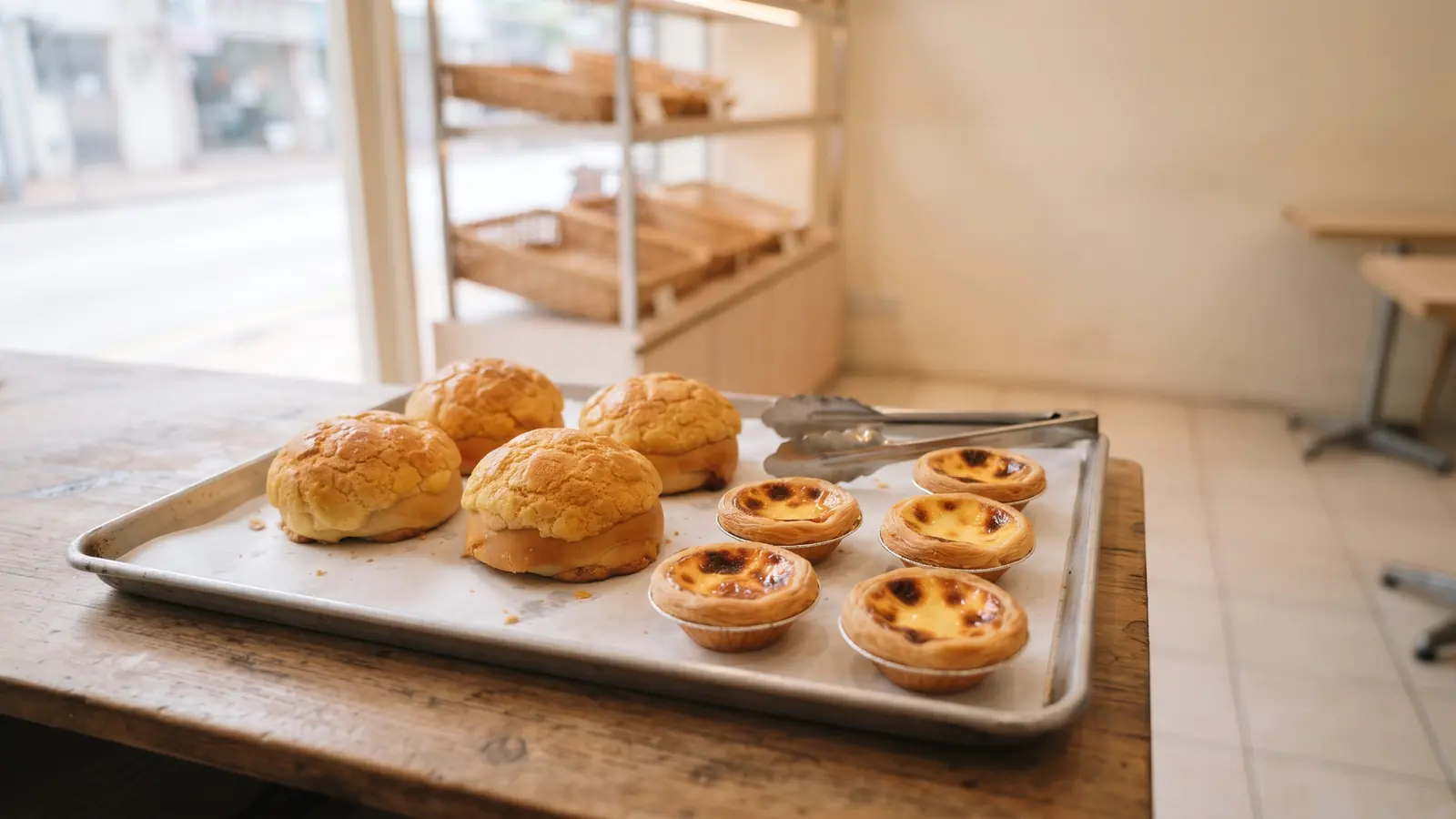
A Hong Kong egg tart has a smooth, pale yellow custard in a shell of shortcrust or flaky pastry. The top is glossy and usually not browned, and the filling is gently sweet.
There are two common shell types. The shortcrust shell is crumbly and cookie-like, like a thick biscuit. The flaky shell is made with layered dough and is lighter and crisper. Bakeries choose one, and some sell both.
The custard is mixed from egg, sugar and a liquid, strained to remove lumps and baked at a moderate temperature so it sets without cracking or browning too much. A good one has a clean, soft wobble and no eggy smell.
What is a Portuguese egg tart?
A Portuguese egg tart has a puff-pastry shell and a richer custard that is baked at a high temperature until the top blisters and darkens in spots. The surface is caramelized and slightly bitter-sweet, which sets it apart from the pale Hong Kong version.
The Portuguese original is called pastel de nata. It is a Portuguese pastry, and a version of it is sold in Macau, which was a Portuguese territory, and in Hong Kong. Macau-style egg tarts are commonly described as combining the Portuguese tart with local taste. The exact path of the recipe is told differently by different sources, and this guide does not name a single inventor.
The custard is typically richer, made with more cream or a thickened base, and the shell is thin, crisp and flaky. It is usually served warm, because the contrast between the shell and the custard is the point.
How do the styles compare?
The styles differ in shell, custard, top and mood. The table gives the usual pattern, though bakeries mix and match.
| Feature | Hong Kong style | Portuguese or Macau style |
|---|---|---|
| Shell | Shortcrust or flaky pastry | Thin, laminated puff pastry |
| Custard | Smooth, pale yellow, lightly sweet | Richer, creamier |
| Top | Glossy, little or no browning | Blistered, dark spots, caramelized |
| Served | Warm or room temperature | Best warm |
| Flavor | Eggy, light, sweet | Deeper, with a caramel edge |
| Typical place | Dim sum, Cantonese bakeries | Macau-style bakeries, Portuguese shops |
Some shops add flavors, including green tea, chocolate or milk tea, and these are variations on one of the two bases. Check the description if you want a specific base.
Where does the egg tart come from?
The egg tart’s history is told in more than one way, and sources disagree. One account links the Hong Kong version to Guangzhou tea houses and to British custard tarts, which came to Hong Kong with colonial influences. The Portuguese version comes from Portugal, and a version reached Macau and later Hong Kong.
Because of this, any single date or inventor you read online is one claim among several. The reliable points are that the Hong Kong and Portuguese tarts are different pastries, that both are now common in Chinese bakeries and that bakers keep changing them.
What is generally agreed is the shape of the idea: a custard in a shell, baked small. That idea exists in many food cultures, which is why the history is difficult to pin down.
How can you tell a good egg tart?
A good egg tart has a crisp, not soggy, shell and a custard that is set but still soft, with a clean sweet-egg taste. Look at the shell, the surface and the temperature.
- Shell: it should hold its shape and break cleanly. A soft, damp bottom means it has sat too long.
- Custard: a gentle wobble, no bubbles, no cracks and no rubbery skin.
- Surface: pale and glossy for Hong Kong style, or evenly blistered for Portuguese style.
- Smell: sweet and eggy, not sulfurous.
- Temperature: warm is best, because the shell crisps in the oven and softens as it cools.
Egg tarts are at their best within hours of baking. If a shop bakes in batches through the day, ask when the next tray is due.
How should you store and reheat egg tarts?
Egg custard is perishable, so tarts should be kept cold if they are not eaten the same day, and eaten within a short time. Ask the baker how long they will keep, because the answer depends on the recipe.
To reheat, put the tart on a rack in a moderate oven for a few minutes, so the shell crisps without drying the custard. A microwave softens the shell and is not recommended for a flaky crust. Do not leave egg tarts out for long on a warm day.
If you have an egg allergy, egg tarts are not suitable, and for any other dietary or allergy question, ask the shop. This guide gives no medical advice.
How is a Hong Kong egg tart made at home?
A home egg tart takes two parts: a pastry shell and a custard. The shell is lined into small tins, the custard is poured in and the tarts are baked until the filling just sets.
- Make or buy the shell. A shortcrust dough is rolled out and pressed into tins. Some bakers use ready-made puff or shortcrust pastry for speed.
- Mix the custard. Eggs, sugar and a warm liquid such as water or milk are stirred together gently so that few bubbles form.
- Strain it. Passing the mixture through a fine sieve removes lumps and makes the surface smooth.
- Fill the shells. Pour the custard in, leaving a little room at the top, and skim off any bubbles.
- Bake at a moderate heat. The custard should set with a slight wobble and stay pale. A very hot oven puffs and cracks it.
- Cool briefly. Let the tarts rest in the tins before lifting them out, so the shells firm up.
Follow a tested recipe for amounts and times, because the balance of egg and liquid decides whether the custard sets smooth or turns watery. A Portuguese-style tart uses puff pastry and a hotter oven, and the method differs in detail.
What flavors and variations exist?
Common variations include a milk tea tart, a green tea tart, a chocolate tart and and a tart with a coconut topping at some shops. They are changes to the standard custard or shell.
Bakeries also sell mini versions, extra-large versions and tarts with a layer of fruit under the custard. These are a baker’s choice, and none is more authentic than another. If you want the classic taste, ask for the plain egg tart and pick the style you prefer, Hong Kong or Portuguese.
What do you drink with an egg tart?
Egg tarts are usually eaten with hot tea, milk tea or coffee, which balance the sweet custard. In Hong Kong tea restaurants the tart is a standard part of an afternoon tea set, and in dim sum restaurants it arrives near the end of the meal.
A strong, slightly bitter drink works best, because the tart is sweet and soft. Plain hot tea such as jasmine or oolong also suits it. These are general habits, not rules, and a cold drink works too if that is what you prefer. A fresh tart is small, so many people order two and share them.
Is there an egg tart on the recorded Six Ping menu?
No. The menu data for this guide, recorded in November 2026, does not list an egg tart, and none of the sources read for it names one. The recorded items are milk bread, sweet and savory breads, custard bun, pandan and taro cakes, birthday cakes and other pastries and cookies.
That does not mean the shops do not sell one. The official Six Ping website could not be read, and a Chinese and Taiwanese-style bakery may well carry tarts, but this guide does not state that as fact. To find out, call the 9889 Bellaire Blvd shop on (713) 774-0325 or check sixping.com, which is the place for current products and prices. For the recorded items, see the menu page, and for the shop’s confirmed hours, see the hours and location page.
Common questions
Are Hong Kong egg tarts and Portuguese egg tarts the same?
No. Both are egg custard tarts, but the Hong Kong version usually has a smooth, pale custard and a shortcrust or flaky shell, while the Portuguese version has a puff-pastry shell and a darkened, blistered top.
Should egg tarts be eaten warm or cold?
Many people prefer them warm from the oven, when the custard is soft and the crust is crisp. They can also be eaten at room temperature the same day.
What is egg tart custard made of?
The basics are eggs, sugar and milk or water, sometimes with cream, and the recipe varies by maker.
Do egg tarts need refrigeration?
Egg custard is perishable, so it is safest to keep leftovers cold and eat them within a short time, and to ask the baker about storage.
Where does the egg tart come from?
Sources disagree. Hong Kong and Guangzhou tea houses, British custard tarts and Portuguese pastel de nata are all part of the story.
Everything practical is on the home page: Six Ping Bakery hours, menu and directions.
This article is general information from an independent guide, not from Six Ping Bakery itself. For the store’s current details see hours and location.