Short answer
A custard bun is a soft bun with a sweet, creamy egg custard filling. The steamed kind, nai wong bao, is a dim sum item served hot, while the baked kind is a bakery bun with a golden top and a thicker custard or cream center.
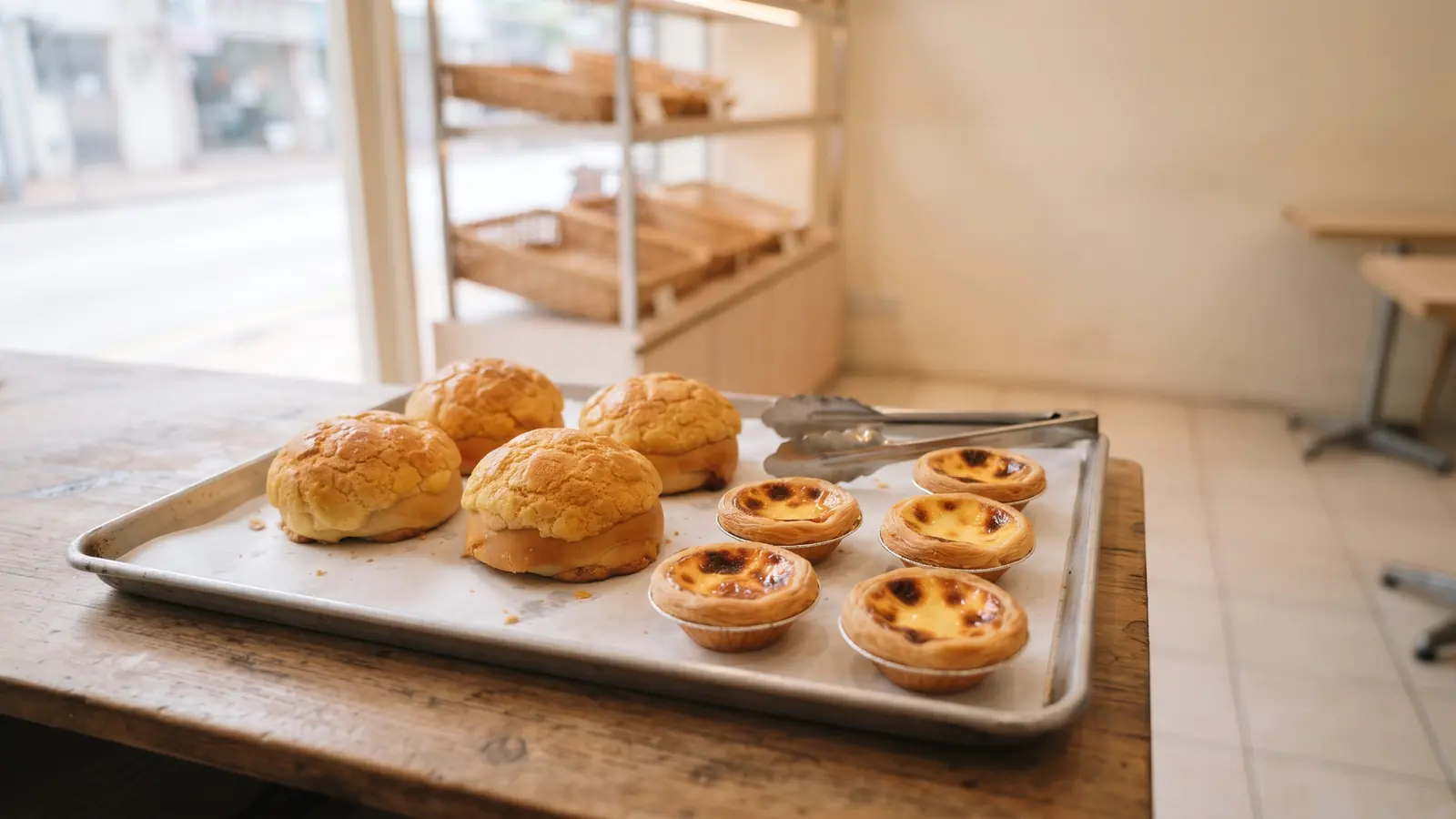
A custard bun is a soft bun filled with a sweet, creamy mixture of eggs, milk and sugar. There are two main families. Nai wong bao is the steamed version, served hot at dim sum with a runny, golden center, and the baked version is a bakery bun with a toasted top and a thicker custard or cream inside. The baked one is most often found in a bakery tray.
What is a custard bun?
A custard bun is bread wrapped around custard. The bread is soft and mildly sweet, and the filling is smooth and eggy. Beyond that, the details vary: custard buns can be round, oblong or braided, with or without a glaze, and the filling can be thin or thick depending on the recipe.
The name causes some confusion because several buns share the idea. A cream bun, a custard bun and a milk bun may be near-identical in one shop and quite different in another. Look at the filling rather than relying on the label alone. Other names include custard cream bun, nai wong bao (also written nai wong pau) and, in Chinese, 奶皇包.
What is the difference between baked and steamed custard buns?
A steamed custard bun is a pale, fluffy dim sum item eaten hot, while a baked custard bun is a golden bakery bun sold at room temperature. The table compares them.
| Steamed (nai wong bao) | Baked custard bun | |
|---|---|---|
| Where you find it | Dim sum restaurants | Bakery trays and cases |
| Bun surface | Pale, smooth and fluffy | Golden, sometimes glazed |
| Filling | Runny, sweet egg custard, sometimes with salted egg yolk | Thicker custard or pastry cream |
| Served | Hot | Room temperature |
| Texture | Cloud-like, very soft | Soft bread with a slightly chewy crust |
| Keeps | Eat right away | Holds for the day |
The steamed bun is eaten at once because the filling is meant to flow. The baked bun travels and keeps well, which is why bakeries sell it.
What does a custard bun taste like?
A custard bun tastes gently sweet, with a vanilla-like eggy flavor and a milky finish. It is less sugary than a doughnut and less rich than a cake. The bread adds a faint yeasty softness, and a baked bun gets a little toasted flavor from the crust.
A few steamed versions add a pinch of salt or salted egg yolk to the filling, which gives a savory twist. Because the flavors are mild, custard buns suit people who find red bean paste or savory buns too bold.
How is a custard bun made?
A custard bun is made by cooking a custard, cooling it, and wrapping it in soft yeast dough before baking or steaming. The steps are:
- Cook eggs, milk or cream, and sugar over gentle heat, thickening with cornstarch or custard powder.
- Cool the custard until it is firm enough to scoop or pipe.
- Make a soft yeast dough, let it rise, and divide it into balls.
- Wrap each ball around a spoonful of custard and pinch it shut.
- Let the buns rise again, then bake until golden or steam until puffed.
Custard powder gives a yellower color and a vanilla note. If the filling is too loose it leaks, so cooks balance thickness against creaminess. A runny steamed filling and a firm baked filling are two deliberate styles, not good and bad versions of the same bun.
How is a custard bun different from similar buns?
A custard bun differs from its relatives mainly in the filling. The table sets out the closest ones.
| Bun | Filling | Usual cooking |
|---|---|---|
| Custard bun | Sweet egg custard | Baked or steamed |
| Cream bun | Whipped or pastry cream | Baked |
| Red bean bun | Sweetened adzuki bean paste | Baked or steamed |
| Pineapple bun | None (sweet crust on top) | Baked |
| Milk bread | None (plain soft loaf or roll) | Baked |
A pineapple bun is named for its crackled sugar crust, not for fruit. The guide to red bean paste covers the bean-filled cousin.
Where does Six Ping Bakery fit in?
The menu recorded for this guide lists a Custard bun, described as an oblong soft bun with a custard filling, based on a 2011 Houston Press review of the 9384 Bellaire Blvd shop. That address is now recorded as the separate Six Ping Teamenjoin tea shop, so do not assume the bun is sold there today.
No price is confirmed. For current items, check the official website, sixping.com, or ask the shop. The menu page lists everything recorded, and the locations page shows each shop.
How should you eat and store a custard bun?
Eat baked custard buns the same day for the softest bread. If the bun feels firm after a day, a very short warm-up can help, though the filling may become looser. Egg-based fillings spoil more quickly than dry pastries, so keep custard buns away from heat, and do not leave them in a hot car.
For a gift box, carry buns flat and avoid stacking them. A steamed bun is best at the table, since it loses its cloud-like texture as it cools.
Where does the custard bun come from?
The steamed custard bun belongs to Cantonese dim sum, and the baked custard bun belongs to the Hong Kong and Taiwanese bakery tradition. Both grew out of southern Chinese cooking, and the exact first date is not documented, so it is safest not to give one.
What is clear is how widely the idea spread. Filled soft buns appear across East Asia, and the Japanese cream pan, a baked bun with custard cream, is a close cousin. Hong Kong bakeries also make a bun with a coconut cream filling, sometimes called a coconut cream bun, which sits next to the custard bun in many bakery trays. The shared idea is soft bread around a sweet cream, and each region adjusts the sweetness and thickness.
Which other custard treats are related to the custard bun?
Several bakery items use the same egg custard idea in a different shell. The table sets out the closest relatives.
| Treat | Shell | Custard style | Served |
|---|---|---|---|
| Custard bun | Soft yeast dough | Thick or runny egg custard | Baked or steamed |
| Egg tart | Flaky or shortcrust pastry | Smooth set egg custard | Warm or room temperature |
| Portuguese egg tart | Laminated pastry | Caramelized custard top | Warm |
| Custard cream pan | Soft baked bun | Pastry cream | Room temperature |
| Custard pudding | None | Set egg custard | Chilled |
The egg tart and Portuguese egg tart have their own guides on this site. A custard bun is the one where the bread, not the pastry, does the work.
How do you make a baked custard bun at home?
A baked custard bun is made at home from a soft enriched dough and a thick custard that has been chilled until firm. The method has two parts, and the second matters more than people expect.
- Make the filling: whisk 2 egg yolks, 1/4 cup sugar and 2 tablespoons cornstarch with 1 cup milk, cook until thick, then chill.
- Make a soft dough from flour, milk, sugar, yeast, an egg and butter, and let it rise until doubled.
- Divide into 8 balls and flatten each one.
- Place a spoonful of chilled custard in the center and pinch the dough closed.
- Let the buns rise again for 30 to 40 minutes.
- Brush with egg wash and bake at about 350 degrees Fahrenheit for 15 to 18 minutes.
Chilling the custard is the key step. A warm or loose filling leaks out as the bun bakes, and a thick, cold one stays inside. The same dough, without a filling, becomes the soft bread covered in the guide to milk bread.
Common questions
What is nai wong bao?
Nai wong bao is the Cantonese name for a steamed bun filled with a sweet, milky egg custard, often served hot at dim sum. The filling is meant to be soft and flowing.
Is a custard bun the same as a cream bun?
They are related. Baked cream buns often use a pastry cream or custard filling, while steamed custard buns use a looser, sweeter egg custard. Shop labels vary, so look at the filling.
Does Six Ping Bakery sell a custard bun?
A 2011 Houston Press review described an oblong soft bun with custard filling at the 9384 Bellaire Blvd shop. No current confirmation or price was found.
Are custard buns served warm or cold?
Steamed ones are served hot. Baked ones are usually sold at room temperature, and a very short warm-up can soften them.
Can you freeze a custard bun?
Plain baked buns freeze better than custard-filled ones, because the egg filling can turn watery when thawed. Eating custard buns fresh gives the best texture.
Planning a visit? Start with Six Ping Bakery Houston: address, opening hours, menu and directions in one place.
This article is general information from an independent guide, not from Six Ping Bakery itself. For the store’s current details see hours and location.