Short answer
A Chinese bakery is a shop selling soft buns, light cakes and pastries, usually self-serve with a tray and tongs and paid for at the counter. Its breads are less sweet than many Western pastries, and it sells both sweet and savory items.
A Chinese bakery is a shop that sells soft yeast buns, light cakes and flaky or crumbly pastries, usually self-serve from open trays and shelves and paid for at a counter. The breads are soft and only mildly sweet, the fillings range from red bean and custard to taro and coconut, and the cakes are usually lighter than their Western counterparts. This guide explains how a visit works, what the main items are, how Hong Kong and Taiwanese styles differ and which Six Ping items fit. It also states what is not confirmed about the shops.
How does a Chinese bakery work?
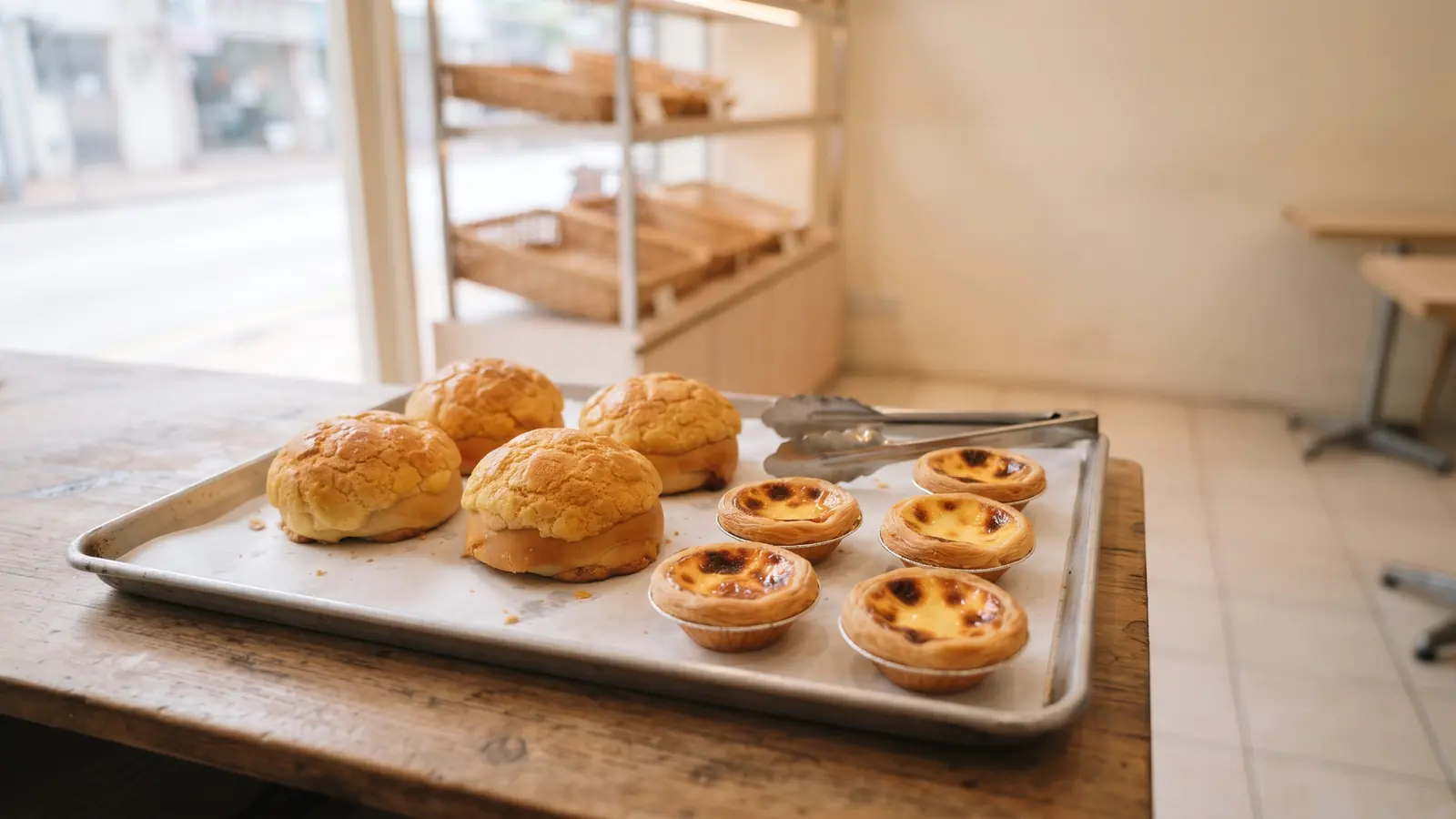
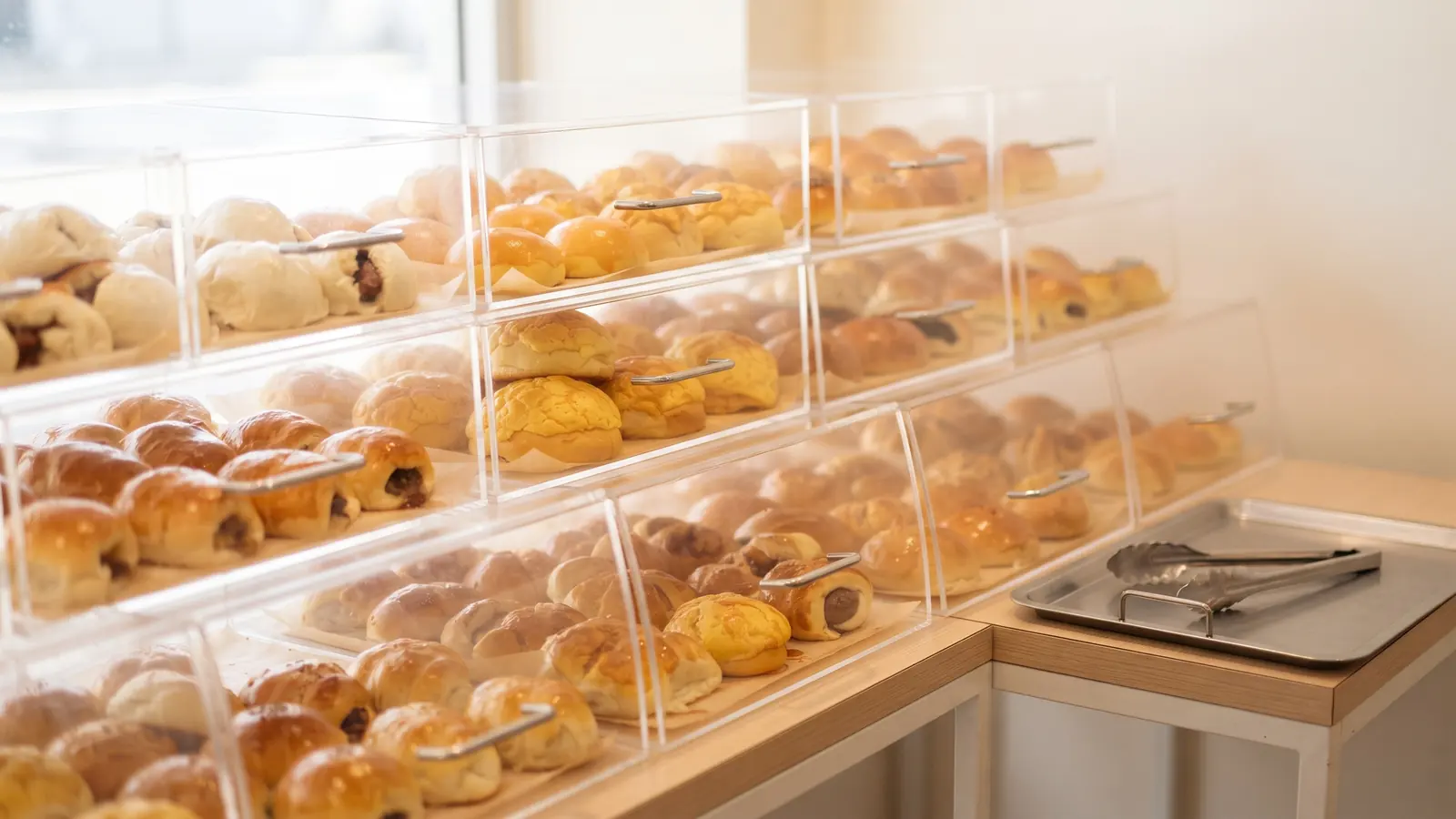
In most Chinese bakeries you pick up a tray and a pair of tongs at the door, choose items from open shelves and take the tray to the counter, where staff bag and charge for each item. There is usually no menu to read, because the products are on display.
The first visit can feel fast. Items are often unlabeled or labeled with only a short name, and the shelves are restocked through the day. A 2011 Houston Press review of a Six Ping shop described this same self-service format with a tray, which is common in the style. That review is about the 9384 Bellaire Blvd shop, now listed as the separate Six Ping Teamenjoin tea shop, and the format at the current bakery shops is not confirmed.
Cakes, especially birthday cakes, are normally in a display case or sold by order at a counter. Ask staff about the size, the flavor and how many days of notice they need. Policies differ by shop, and the Six Ping pre-order policy was not confirmed.
What is different about a Chinese bakery compared with a Western one?
The main difference is the style of bread and sweetness. Chinese bakery bread is soft, enriched with milk and eggs, and often only lightly sweet, with fillings placed inside buns instead of heavy frosting on top.
| Feature | Chinese or Taiwanese bakery | Typical Western bakery |
|---|---|---|
| Bread | Soft, enriched, pillowy buns and loaves | Crusty loaves, croissants, rolls |
| Sweetness | Often mild | Often stronger, with glazes and icings |
| Fillings | Red bean, custard, taro, lotus, coconut | Fruit, cream, chocolate, nuts |
| Cakes | Light sponge, fresh cream, fresh fruit | Buttercream, fondant, dense layers |
| How you shop | Tray, tongs, pay at the counter | Order at the counter or from the case |
| Savory items | Common, mixed in with sweet ones | Usually separate or limited |
The two are not strictly opposed. Many Western bakeries sell soft rolls, and many Chinese bakeries sell croissants. The table describes the common pattern, not a rule.
What are the main sweet buns and pastries?
The main sweet items are plain milk buns, custard buns, red bean buns, coconut buns, pineapple buns, egg tarts and sweet pastries shaped like animals. Together they cover soft bread, cookie-crust bread, custard and filled pastry.
- Milk bun: a plain soft bun made with milk, sold singly or as a loaf. A separate guide covers milk bread.
- Custard bun: a soft bun with a sweet custard filling, often oblong.
- Red bean bun or pastry: sweetened adzuki bean paste inside bread or pastry.
- Coconut bun: a bun with a sweet, buttery coconut filling, sometimes called a coconut cream bun in Hong Kong style.
- Pineapple bun: a bun with a sweet cookie-like crust. It has no pineapple in it, and it has its own guide on this site.
- Egg tart: a small tart with a custard filling, also covered by its own guide.
- Animal-shaped pastries: decorative pastries shaped as turtles and other animals, a feature of some Taiwanese-style shops.
Names change by shop and region, so a “coconut cream bun” at one counter may not match another’s. When in doubt, point at the item or ask what the filling is.
What are the savory buns?
Savory buns are soft buns with a meat, egg or vegetable filling or topping, and they are a big part of what a Chinese bakery sells. They are eaten as breakfast, a snack or a light lunch.
Common examples are the scallion bun with chopped green onion on a soft bread, egg buns, curry-filled buns and buns baked with a chicken or beef filling.
Savory items sit on the same trays as sweet ones, which is why a quick look before you pick matters. A bun that looks plain may be filled with meat. If you avoid certain ingredients, ask staff about each item and do not guess. This guide gives no dietary or religious advice.
How do cakes work in a Chinese bakery?
Chinese bakery cakes are generally soft sponge cakes with whipped cream and fresh fruit, with flavors such as pandan, taro, mango, strawberry and mocha. They are lighter and less sweet than a typical frosted layer cake.
Whole cakes may be ready-made in a display case or made to order. Cakes cut by the slice are also common in some shops. If the shop makes birthday cakes, there may be a way to have words written on top, and staff can tell you what is possible.
For Six Ping, a directory lists pandan and taro cakes and birthday cakes as sold at the 9889 Bellaire Blvd shop. The directory for the 10623 Bellaire Blvd shop adds that it has fewer ready-made cakes than other shops. Neither source gives prices, and the cake order process is not confirmed.
What is the difference between Hong Kong and Taiwanese bakery styles?
Hong Kong style is known for egg tarts, pineapple buns and coconut cream buns, while Taiwanese style is known for taro and red bean items, mochi cakes and decorative pastries. The two overlap heavily, and a single shop often sells both.
| Style | Often associated items | Character |
|---|---|---|
| Hong Kong | Egg tart, pineapple bun, coconut cream bun, wife cake | Cantonese influence, tea-house snacks |
| Taiwanese | Scallion bun, taro and red bean, mochi cake, sponge cake | Softer breads, lighter cakes, Japanese influence |
| Mainland Chinese | Mooncakes, almond cookies, sweet pastries | Regional pastry, festival foods |
| Shared | Milk bread, custard bun, coconut bun | Common in most shops |
Do not expect a rigid label on a shop. Six Ping is described by its listing as a Chinese and Taiwanese-style bakery, which fits a mix. This is a general overview, and the style of each item varies by baker.
What should you try first?
Try one soft plain bun, one filled bun, one savory item and one pastry, and add a small cake if the shop sells slices. That range shows you the main textures without overbuying.
A sample first tray:
- A milk bun or a slice of milk bread, to taste the soft base.
- A custard or red bean bun, for a sweet filling.
- A scallion bun or another savory bun, for the savory side.
- One pastry, such as an almond cookie or an animal-shaped one.
Buns are best on the day they are baked, and most bakeries bake through the day. If you take a loaf home, store it in a bag at room temperature for a day or two or freeze slices. Tongs are for items only, so do not squeeze the bread to check softness.
What does a visit to a Chinese bakery usually cost?
Prices vary by shop and item, and no confirmed Six Ping bakery price exists, so this guide cannot give one. The only sourced figure is Google Maps’ typical spend of $1 to $10 per person for the 9889 Bellaire Blvd shop, read on November 11, 2026.
That figure is Google’s summary of spending, not a price list, and a cake costs more than a single bun. Items are usually priced individually, and the counter staff total the tray. If you are buying for a group, ask for a total before you add more. A 2011 review gave prices for a Six Ping shop, but they are out of date, so this guide does not repeat them. The official Six Ping website is the place for current prices.
Are there tips for a first visit?
Go early for the widest choice, expect a quick pace and ask staff if a label is unclear. Most items sell through the day, and popular ones can run out by afternoon.
Use the tongs for every item, keep savory and sweet items on the same tray only if you plan to eat them soon, and ask for items to be bagged separately if you are carrying them far. Buns are best on the day they are baked. If you are buying for a group, a mix of five or six different items makes a good tasting spread.
How does a Chinese bakery guide connect to Six Ping in Houston?
Six Ping is listed as a Chinese and Taiwanese-style bakery, and the menu data for this guide names these items: milk bread, sweet breads, savory breads, custard bun, pandan cake, taro cake, birthday cakes, brown sugar mochi cake, cream-filled sponge cake, animal-shaped pastries, almond cookies and gelato and ice cream. That is a record from a directory and a 2011 review, as of November 2026, and it is not a current shelf list.
No bakery prices were confirmed, so none are given. The official website, sixping.com, is the place for current products and prices. Hours at the 9889 Bellaire Blvd shop are confirmed only for Tuesday to Friday, and Saturday, Sunday and Monday were not. Details are on the hours and location page, the menu page and the locations page.
Common questions
How does a Chinese bakery work?
In most, you take a tray and tongs, pick items from open shelves and pay at the counter, where staff bag them. Some also have a counter for cakes sold by order.
Are Chinese bakery items very sweet?
Many are only lightly sweet, with soft bread and fillings such as red bean, custard or taro. Cakes tend to use light cream and fruit rather than heavy frosting.
What is the difference between Chinese and Taiwanese bakeries?
They overlap heavily. Hong Kong style leans on egg tarts, pineapple buns and coconut cream buns, while Taiwanese style adds scallion, taro and red bean items.
Can I order a cake at a Chinese bakery?
Many take cake orders in advance. Ask the shop about sizes, flavors and notice, as policies differ by shop.
What should a first-time visitor try?
A soft milk bun, a custard or red bean bun, a savory bun such as a scallion bun and one pastry cover the range.
This page is part of the independent guide to Six Ping Bakery, which has the address, hours and menu.
This article is general information from an independent guide, not from Six Ping Bakery itself. For the store’s current details see hours and location.